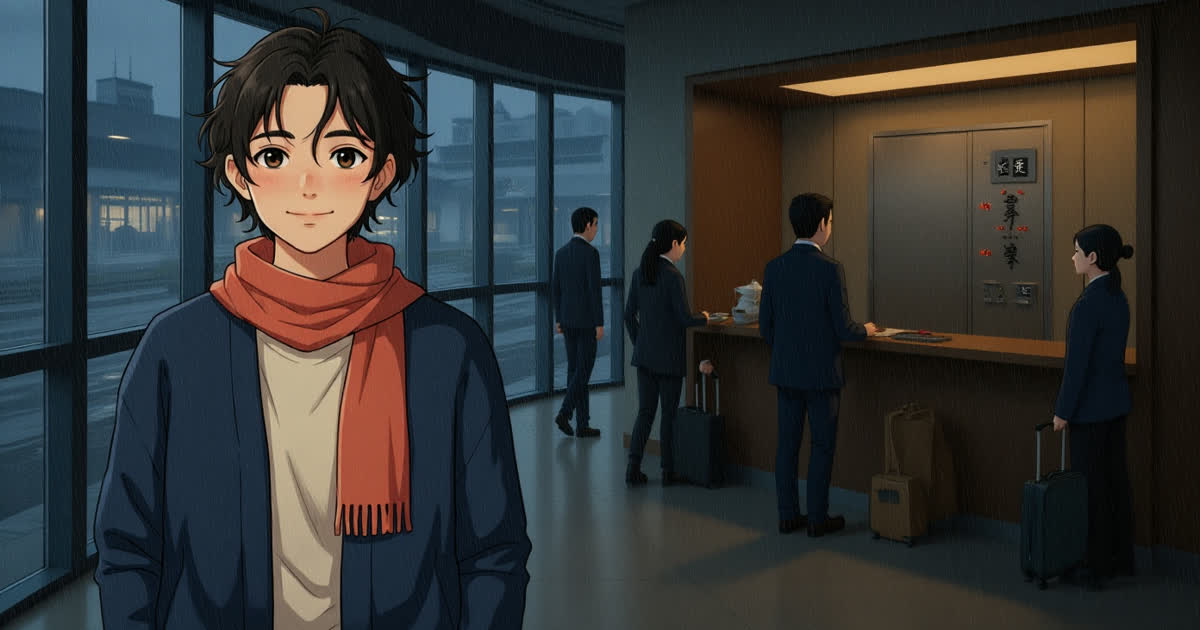
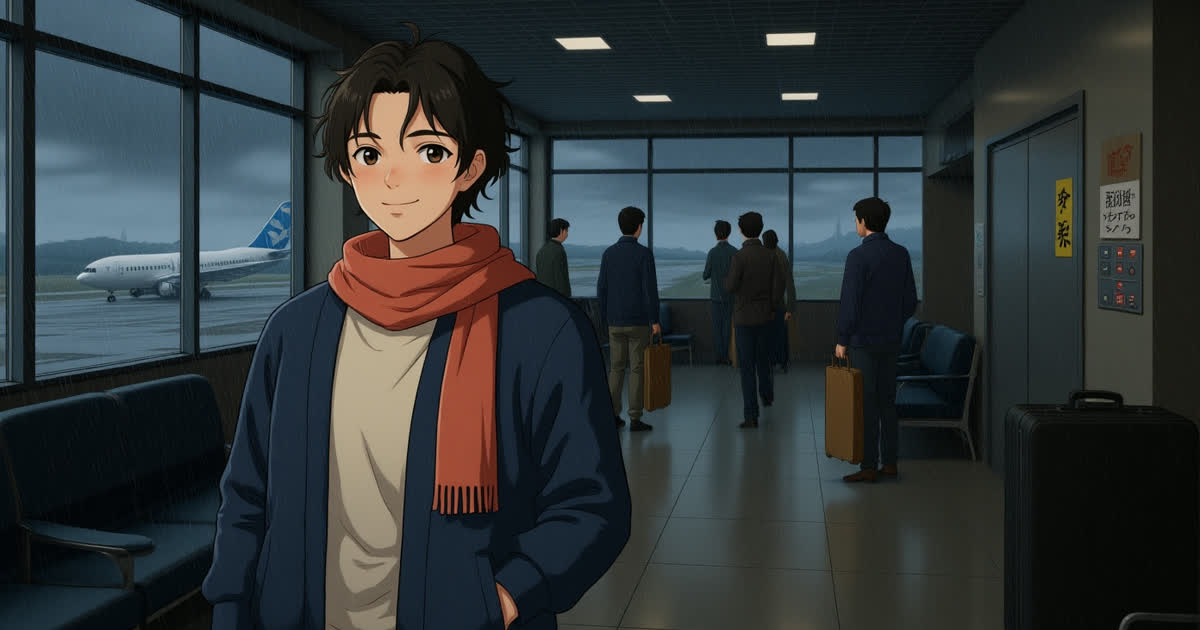
The board still shows your flight number. The gate is still open. Then a speaker says a word your app taught you as "no thank you," and the plane is not going. That word is 欠航になりました (kekkō ni narimashita). The reel above is thirty seconds of that trap. This page is how to hear it, how to tell a cancelled flight from a delay, and the one sentence that gets you rebooked.
What does 欠航になりました mean at a Japanese airport?
欠航になりました (kekkō ni narimashita) means the flight has been cancelled. 欠航 (kekkō) is the aviation word for a plane that will not fly. 欠 is "missing," 航 is "flight," and になりました (ni narimashita) is "it has become." The gate is still there. The flight number is still on the board. The aircraft is not taking off. Staff will say it once, fast, often with no English loop. Treat it as an order to leave the gate, not as trivia. The same survival instinct that starts almost every request with すみません applies here: hear the word, walk to a human, speak.
How is 欠航 different from 結構です?
They sound the same. 結構です (kekkō desu) is the polite "no thank you" your app taught — the sentence in the konbini reel that freezes tourists at the register when the clerk offers a bag or a point card. 欠航 is a different word with different kanji. Same sound. Opposite life. The airport is not turning you down politely. Look at the departure board. If the two characters next to your flight are 欠航, the plane is dead. Do not stand at the gate waiting for a "yes" that is never coming. The joke in the reel is the textbook, not the storm.
How do you tell 欠航 from 遅延 and 欠便?
欠航 means the aircraft will not take off today. 遅延 (chien) means delay: the plane is still going, later. A delay can stretch, but the flight still exists. 欠便 (ketsubin) means the scheduled service is cancelled. You will see it on flights, highway buses, and ferries. For the purpose of your suitcase, treat 欠航 and 欠便 as the same action: stop waiting, walk to the counter. A board that says 出発遅延 (shuppatsu chien, departure delay) is a wait. A board that says 欠航 is a queue at the desk. If trains into the airport are also down, that is a different word — 計画運休, a planned typhoon shutdown — and it does not change the fact that this plane is gone.
What does the airport announcement actually say?
The PA often says 欠航となりました (kekkō to narimashita). The agent at the counter says 欠航になりました. Same word. Two particles. と is the formal "became"; に is the everyday one. You do not need to hear the difference. You need to hear 欠航. In typhoon season the full sentence is 台風のため、欠航になりました (taifū no tame, kekkō ni narimashita), "because of the typhoon, the flight has been cancelled" — the line in the reel. Japan names its storms by number, not by English names, which the 台風号 reel unpacks so the PA and the news match. There is often no English loop on the first pass. Watch the board. The two kanji are the announcement.
What do you say at the counter to get rebooked?
Ask 振替便はありますか? (furikae-bin wa arimasu ka?), "is there an alternative flight?" That is the whole sentence. Catch the agent with すみません, then the question. Weather cancellations in Japan are usually rebooked at no extra fare onto the next seat the airline has. 振替便 (furikae-bin) is the replacement flight; 代替便 (daitai-bin) is the same idea in stiffer Japanese. If you would rather have the money, ask 払い戻しできますか? (haraimodoshi dekimasu ka?), "can I get a refund?" — the airport cousin of 払い戻し on a cancelled train. A yes is a new boarding pass or a nod toward another gate. A later-day offer is a date change: 日付変更, move the booking, do not cancel it. Do not mime a plane crashing. Say 欠航, then 振替便.
What should you do if a typhoon cancels your flight?
Rebook first, then the hotel. A typhoon that kills a Haneda or Kansai departure often kills the rails into the terminal the same afternoon. Get the next seat while you are still at the airline desk — that queue is the scarce resource, not the weather app. Then, if checkout is close, walk to the hotel and ask もう一泊できますか? (mō ippaku dekimasu ka), "can I stay one more night?", the sentence in the extra-night guide. Add the reason: 台風でフライトが欠航になりました (taifū de furaito ga kekkō ni narimashita). Do not wait at the gate for a plane the board already called 欠航. Buy water and a onigiri before the airport shops empty. The first English you used on arrival, 観光です at immigration, will not help at this counter. Japanese will.
Do trains use 欠航 too?
No. 欠航 is for aircraft. Trains use 運休 (unkyū), cancelled service, or 運転見合わせ (unten miawase), halted for now with no restart time. If the Narita Express or the Tokyo Monorail is dead and your flight is still 欠航, you are stuck on both sides. Rebook the plane, then find a bed near the terminal rather than gambling on a last train that a planned suspension already pulled. A refund on the unused rail ticket is a separate window, the same 払い戻し desk you would use after any cancelled train. Two systems, two words, two queues. Learn 欠航 for the gate. Learn 運休 for the platform. Mixing them at the wrong counter burns the ten minutes while the next seat is still open.
Carry three habits into a Japanese airport when the sky goes dark. Hear 欠航 as a cancelled plane, not as 結構です. Ask 振替便はありますか? before you sit on the floor. Then fix the night with もう一泊できますか? if the rails are dead too. Do that and the homophone stops being a trap. Watch the thirty-second version of the gate once, then look at the board. For the rest of the storm — the extra night, the silent railway, the short list of tourist words — keep もう一泊, typhoon train shutdowns, and the essential Japanese words on your phone.