
On August Seventh Japan's Calendar Says It Is Autumn. Then You Step Outside.
To say The lingering heat is brutal, isn't it. in Japanese, say 残暑が厳しいですね (zansho ga kibishii desu ne).
Japan officially ends summer on the seventh of August. Nobody told the weather.
In this video
- 八月七日は立秋です。暦の上では、もう秋なんです。 hachigatsu nanoka wa risshū desu. koyomi no ue de wa, mō aki nan desu. August seventh is 立秋. On the old calendar, autumn has already started.
- でも、外はまだ真夏ですよね。 demo, soto wa mada manatsu desu yo ne. But outside it is still the height of summer, right?
- だから立秋を過ぎたら、「暑い」じゃなくて「残暑」と言うんです。 dakara risshū o sugitara, "atsui" ja nakute "zansho" to iu n desu. So once that day passes, it is not hot any more. It is lingering heat.
- はがきも同じで、立秋からは「暑中見舞い」が「残暑見舞い」に変わります。 hagaki mo onaji de, risshū kara wa "shochū mimai" ga "zansho mimai" ni kawarimasu. Postcards do the same. From that day, midsummer greetings become late summer greetings.
- 残暑が厳しいですね。 zansho ga kibishii desu ne. The lingering heat is brutal, isn't it.
- 八月の終わりにこう言えたら、ぐっと自然に聞こえますよ。 hachigatsu no owari ni kō ietara, gutto shizen ni kikoemasu yo. Say this at the end of August and you sound a lot more natural.
Kanji in this phrase
- 残暑
- ざんしょ
- 立秋
- りっしゅう
- 厳しい
- きびしい
- 暑中見舞い
- しょちゅうみまい
- 残暑見舞い
- ざんしょみまい
Why this phrase
立秋 falls on the seventh of August, the old calendar's first day of autumn, landing in the hottest week of the year. From that date the whole country switches vocabulary: 暑中見舞い cards become 残暑見舞い, and 暑いですね becomes 残暑が厳しいですね. Say it in late August and you sound like someone who lives there rather than a visitor reading a thermometer.
Up next
 Survival
▶
Survival
▶
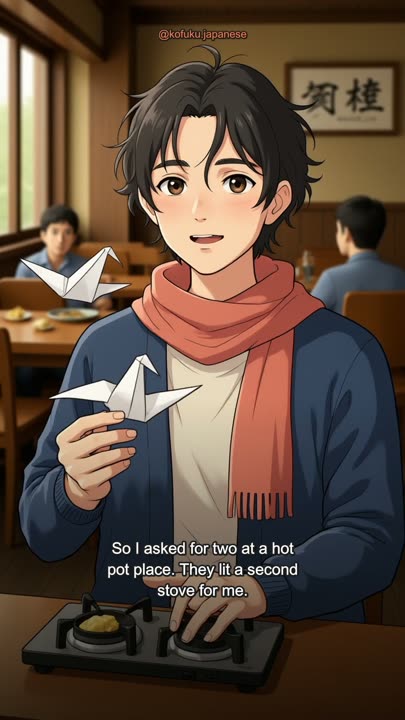
You Said Two and They Lit a Second Stove
nininmae de onegai shimasu · two servings, please
 Survival
▶
Survival
▶
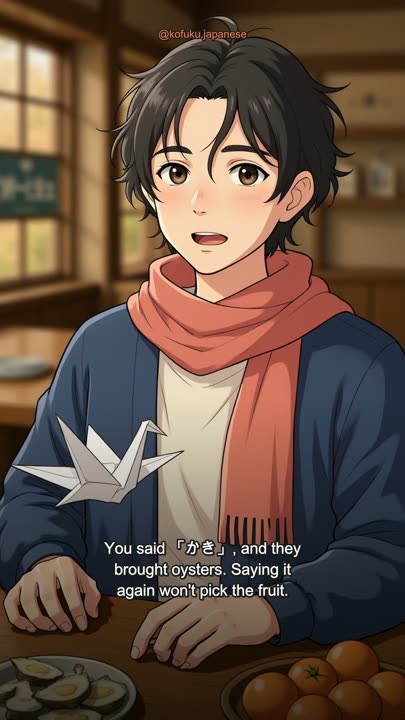
You Ordered Kaki and They Brought the Oyster
kudamono no kaki o kudasai · the fruit persimmon, please
 Survival
▶
Survival
▶
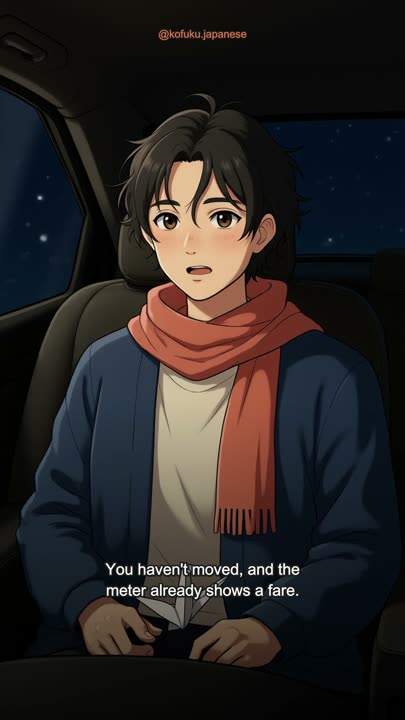
The Taxi Hasn't Moved.
hatsunori · the taxi's starting fare
 Survival
▶
Survival
▶
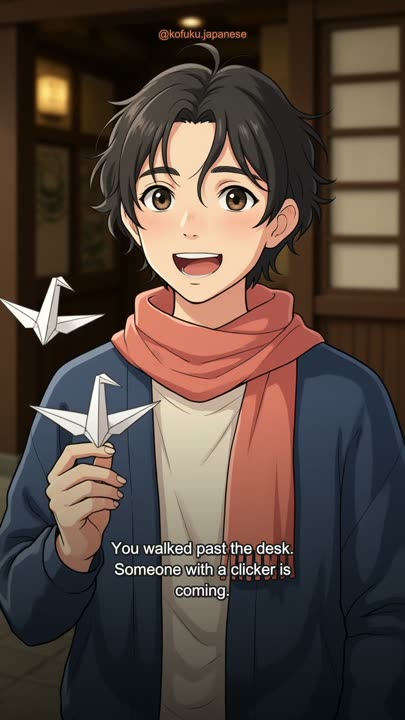
Those Two Kanji Were the Fee.
haikanryō · the fee to view a temple or garden
More phrases like this
- She Had to Walk Around for Your Chicken. · jibun de o-tori kudasai
- Your Robe Is on the Funeral Side. · migi-mae
- You Let the Extra Train Leave. · rinji ressha
- Your Train Is a Bus at the Curb. · basu daikō ga dete imasu
- She Said Take Your Time. You Stood Up. · go-yukkuri
- The Cheap Room Smelled Like Smoke. · heya o kaete moraemasu ka
- Did You Catch That? The Door Is Four Cars From the Front. You Counted From the Back. · mae kara nan-ryōme desu ka?
- Did You Catch That? Nodding in Akihabara Just Sold You a Warranty. · hoshō wa ikaga desu ka?
- Google Walked You Into a Loading Dock. That Sign Is Not a Suggestion. · kankeisha igai tachiiri kinshi
- POV: The Guard Pointed at Your Backpack. Then at a Tiny Window. · kurōku wa arimasu ka?
- POV: You Walked Out of the Museum for a Bathroom. The Gate Thinks You Left. · sai-nyūjō dekimasu ka?
- The Photo Spot Has a 40-Minute Line and One Word on the Sign. · Kōyō ga migoro desu
Get the free phrasebook
15 essential phrases for your trip — romaji included, zero studying.
No spam. Unsubscribe anytime.