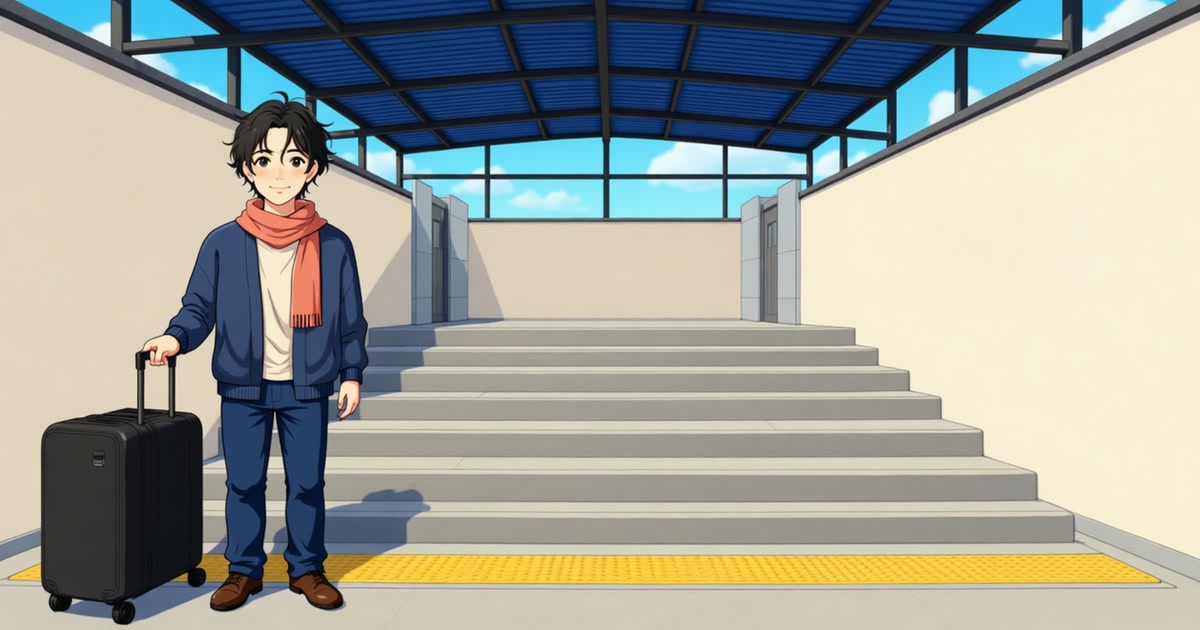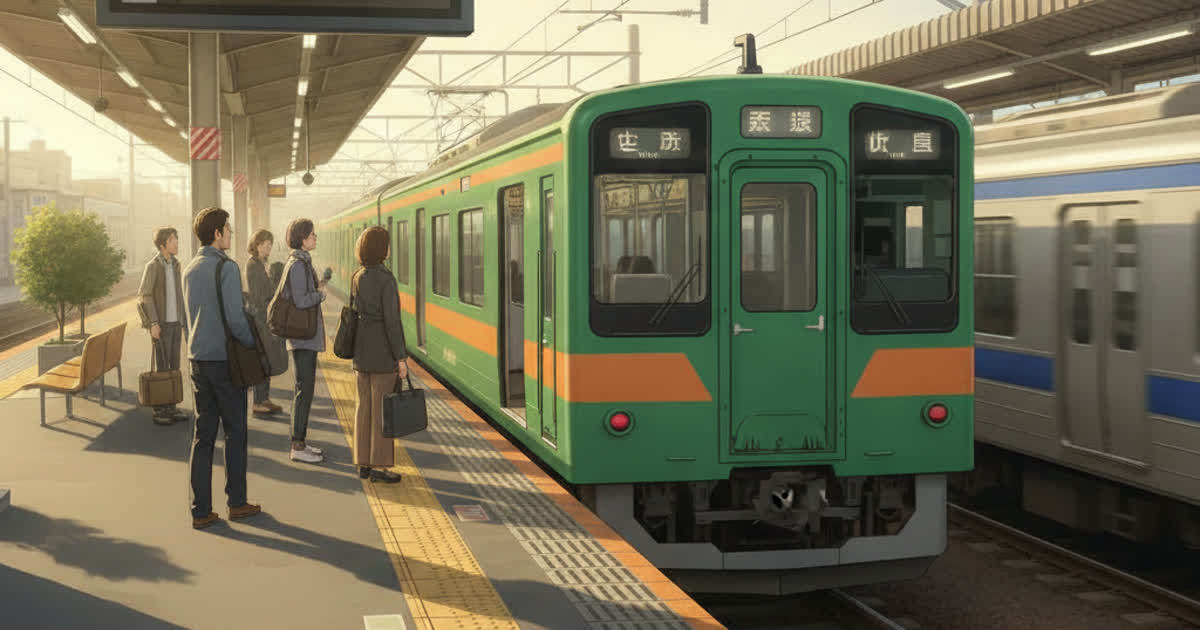
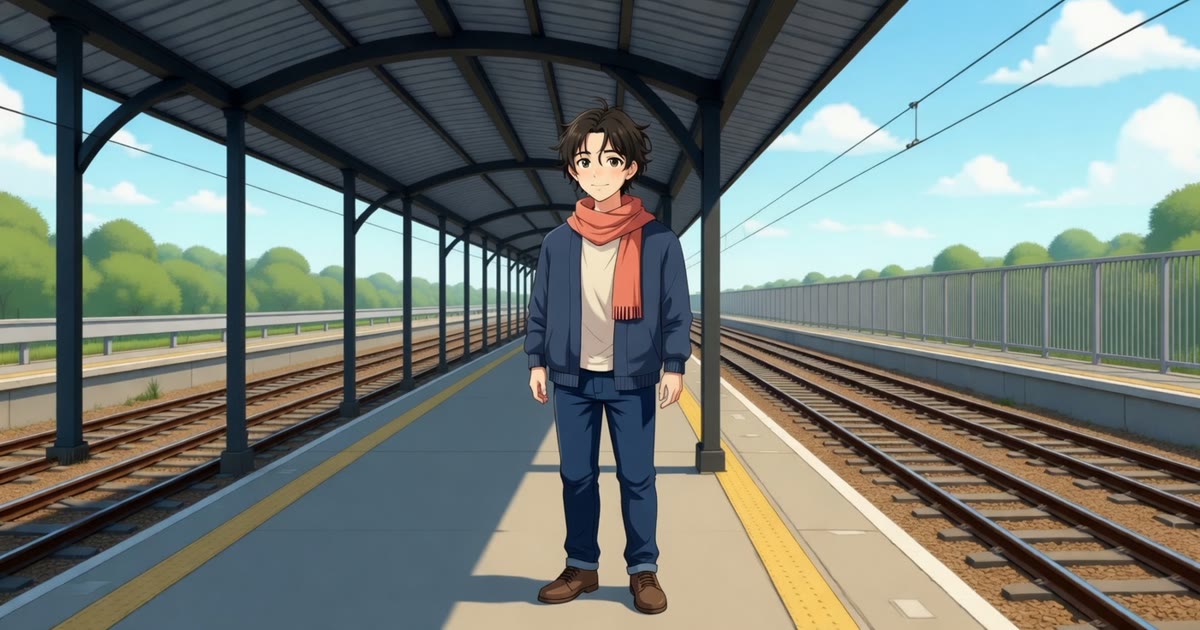
The reel above, published 11 October 2026, is one platform and the train you wanted, already moving on the far side. Staff point across the tracks. The line is 反対側です。 The next line is ホームは反対側です。 This page is that station reply: what the words name, how you reach the far platform, and the lines people mix up with it.
What does 反対側です mean at a Japanese station?
反対側です (hantai-gawa desu) means "It's the other side." That is the reel's English. 反対側 (hantai-gawa) is the place. The Seisen Nihon Kokugo Daijiten, on Kotobank, checked 20 October 2026, reads the headword はんたい‐がわ and defines it as 反対の関係にある位置・方向・立場など。 (Hantai no kankei ni aru ichi, hōkō, tachiba nado.) A position, a direction, or a standpoint that stands in the opposite relation. Shogakukan's Digital Daijisen, checked the same day, splits 反対 (hantai) into three senses. Sense 1 is a position, an order, a direction, or a way of being that is the reverse. Sense 2 is one of a pair. Sense 3 is refusing an opinion: 君の意見には反対だ。 (Kimi no iken ni wa hantai da.) I am against your view. The station line is sense 1 plus 側. Daijisen's reading がわ for 側 points at one direction or one face of a thing, and the example is 向こう側に渡る。 (Mukō-gawa ni wataru.) Cross to the far side. です closes it as a polite statement. The reel's second sentence names the object: ホームは反対側です。 (Hōmu wa hantai-gawa desu.) A second Daijisen headword ホーム, checked the same day, is short for プラットホーム, and the example is 上りのホーム。 The platform is on the other side. The video's English for that line is "The platform is on the other side." Staff say it while pointing across the tracks. The train you watched leave was on that far platform. Hear 反対です with no 側 and you may be hearing sense 3, a disagreement. The station sentence has 側 in it.
How do you pronounce 反対側です?
Say ha-n-ta-i-ga-wa de-su, eight beats: は, ん, た, い, が, わ, で, す. The Seisen headword is はんたい‐がわ, and the historical kana beside it is がは. Modern spelling is がわ. 側 on its own can be かわ (kawa). In this compound the k voices to g. "Hantai-kawa" drops that voicing. そば (soba) is the other reading of 側, the one Daijisen glosses as nearby. 反対側 is not hantai-soba. The ん is its own beat. Saying the word in five beats drops it. Every vowel in 反対側です is short. There is no macron on たい and none on がわ. です is two short beats. There is no か on the end. The line is a statement. The fuller line, ホームは反対側です。, adds four beats in front: ほ, お, む, わ. The long o in ホーム is two beats, ほ and the length mark. The particle は is wa, not ha. Twelve beats in all.
What do you do when staff point across the tracks?
Follow the hand. Do not step onto the rails. Inoue Takashi, writing in Travel Watch on 6 May 2026, describes the ordinary small station with two side platforms and two tracks. One pattern puts the station building and the ticket gate on one platform. The path to the other platform is a 構内踏切 (kōnai fumikiri), a crossing inside the station, a 跨線橋 (kosenkyō), a footbridge over the tracks, or a 地下道 (chikadō), an underpass. He has not counted every station, and he calls that pattern probably the more common one. The other pattern gives each platform its own gate and leaves out any path between them. Enter the wrong gate and you cannot reach the far platform from inside. At Kintetsu Nara Line Hiraoka Station, the same article says you reach the Namba-bound train from the opposite platform by an underpass outside the gates. At a staffed station, explain and have them let you out. If you tapped in with a transit IC card, Inoue says the staff must cancel that entry record. Skip the cancel and the gate on the other side errors when you tap in again. Inoue adds that an unstaffed station has no entry check, so you walk out and around. The train you watched leave was the one you wanted. The reel tells you to move while the next one on that side is still catchable. Confirm with 反対側ですね。 (Hantai-gawa desu ne.) The other side, right? Then take the stairs the hand indicated. The yellow strip at the edge is a different order. The step-back page is that strip. Walking across the rails is not this phrase.
How is 反対側です different from 東口で待っています?
東口で待っています (higashi-guchi de matte imasu) means "I'll be waiting at the east exit." 東口 (higashi-guchi) is the east exit of the station. で marks that place. 待っています is the polite "I am waiting." A friend texts it so the two of you pick one door of a big station. 反対側です。 is staff, on the platform, pointing at the tracks. The other side in that sentence is the other platform, not 西口 (nishi-guchi), the west exit. Walk out to the west exit because you heard "other side," and you leave the train. Numbered doors are a third map. Exit 3 and Exit 35 can be different streets. The which-exit reel is 何番出口ですか。 (Nanban deguchi desu ka.) Which exit number? Ask that before you leave the platform when a hotel named a number. It does not tell you which platform the train left from.
How is a station 反対側です different from the bus-stop line?
The words are the same. The place is not. At a bus door you hear いいえ、反対側です。 (Iie, hantai-gawa desu.) No, the opposite side. The bus-stop page is that reply. The driver nods at the pole across the street, or at the other bus on this curb. 反対側 there means cross the road, or wait for the other board. On a station platform the same sentence means the other track. There is no street to cross. The nod points at the far platform, and the path is the footbridge, the underpass, or, at a station like Hiraoka, back out through the gate. Do not reuse the bus habit of stepping into the road. The rails are not a curb.
How is 反対側です different from 方面 and 何番線ですか?
方面 (hōmen) names the direction of the trains on the platform you are already standing on. The direction page is that header. 新宿方面 can still be your train when Shinjuku is not your stop. 反対側です。 says you are on the wrong platform. The header over your head is the other way. 何番線ですか? (nan-ban-sen desu ka) asks for the platform number. That question is the which-platform reel. Staff who say 反対側です。 have not given you a number. They have given you a side. Once you are on that side, ask 何番線ですか? if you still need the number.
反対側です。 means the platform is on the other side. Follow the pointing hand to the footbridge, the underpass, or back out through the gate. The line is not the east exit, and it is not the bus stop across the street. The 30-second version is the same line, said on the platform.